After Builders Cleaning in Clifton Village
After Builders Cleaning across Clifton Village and NG11, from the team in New Basford.
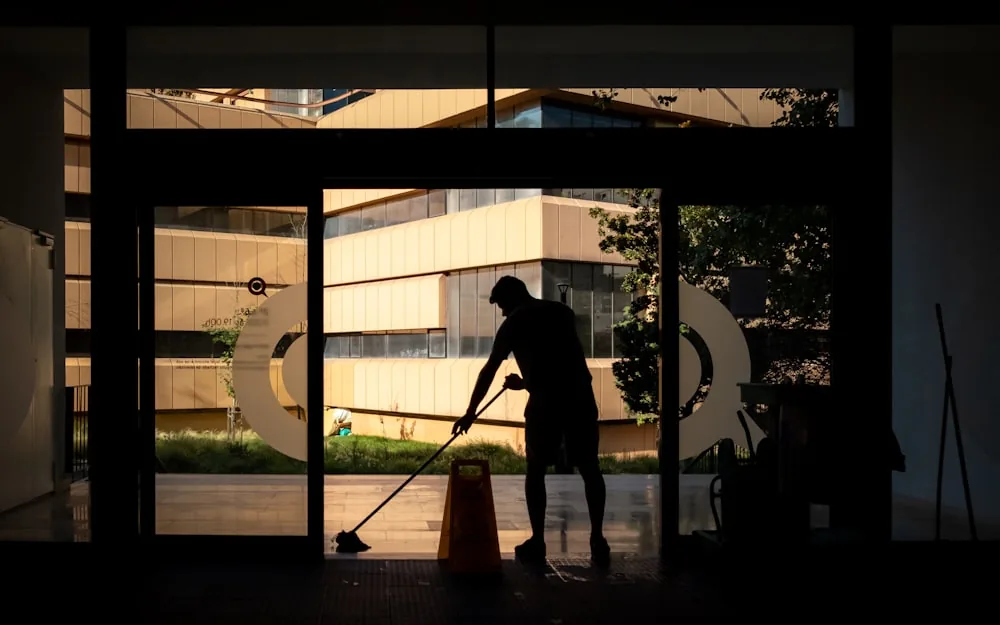
After Builders Cleaning for Clifton Village homes
There is rarely room for a skip, so materials and waste go in and out by hand down the lane. The dust that follows settles on original fabric nobody can wipe, so it lifts off on a brush head rather than a cloth.
Projects here are usually repair rather than expansion, because there is a limit to what may be added to a building in this setting. Re-roofing, re-pointing, window repair and damp work, all of it done to fabric that is already there, and all of it producing a different mess from a new extension. There is also nowhere to put anything. The lane will not take a skip outside most of these houses and will not take a lorry at all, so materials come in by hand and waste goes out the same way, in bags, past the front door. Our part starts before the builders finish, because the route in is a working surface for the whole job, and cleaned only at the end it has already been walked through the house every day since.
Clifton Village sits in NG11, under Nottingham City Council. Conservation rules decide more here than the age of the houses does. Original windows stay, so nobody has traded small panes for a sealed unit; walls are soft brick and stone in lime mortar that a pressure lance opens up; and nothing may be fixed to an elevation, which rules out permanent fittings.
What we run into on Clifton Village after builders cleaning jobs
Re-pointing and roof work put more into the gutters than anyone expects. Sand, mortar crumbs and slate dust go over the edge, sit in the run, and then the first heavy rain turns them into a grey slurry that finds the joints and the outlets. The rainwater goods on these houses are cast iron, so a blockage backs up and spills at a hopper head instead of overflowing evenly along the length, and what that leaves is a concentrated grey wash down one line of the elevation, across the window heads and onto the glass below. It appears weeks after the scaffold has gone, which is why nobody connects the two. Gutters get cleared as part of the finish.
How a Clifton Village after builders cleaning job actually runs
Most of this work happens while people are still living in the house, because there is nowhere else for them to go and the job is repair rather than an extension they can simply wait out. That changes what we are asked for. Dust control becomes the actual service, and it is difficult here because nothing seals. Doors do not fit their frames, floors have gaps along every board, and an open flue behind a blocked up fireplace is a duct running from the ground floor to the roof. A screen taped across an opening that is not square leaks at the top corner inside a day. So we set the containment up and then keep checking it through the job rather than once at the start, and we agree with you which rooms are the clean side and stay that way. Timing is worth saying plainly as well: interim visits during the works save far more trouble than one large clean at the end, because a route walked daily by trades spreads whatever is on it into every room that opens off it. The final clean is booked for after the scaffold comes down.
Who books it here
The local reference points are St Mary's church, Clifton Hall and its grounds, the green and the wooded escarpment, which is usually enough for us to find a property without a postcode lookup.
We run Clifton Village on the same round as Clifton, Wilford and Ruddington.
What we check on every Clifton Village job
Opening anything up in these houses releases two things you do not meet on a modern site. The first is soot. A chimney swept badly or blocked off decades ago still holds a greasy black deposit, and once it is disturbed it settles across every horizontal surface as a film that smears the instant a damp cloth touches it. It has to be lifted dry, with a vacuum on a filter fine enough to hold it and then a dry sponge, before anything wet goes near. The second is the dust from lath and old plaster, which carries short lengths of animal hair from the original mix and a great deal of very fine sand. That sand is heavy, drops out of the air quickly, works down into carpet pile, and keeps reappearing for weeks out of the floor void every time somebody crosses the boards above it.
What the after builders cleaning covers
A sample of what is included
- Stage three, the final buff: Any remaining marks
- Stage one, the rough clean: Paint, plaster, grout and adhesive from glass, tiles and hardware
- Stage two, the detail clean: Skirting boards, architraves, switches and extract vents
- Stage three, the final buff: Glass, chrome and floors
That is a sample rather than the whole list. The full after builders cleaning page sets out every section of the scope, what is deliberately excluded and why, how long it takes on each property size, and what tends to go wrong.
What after builders cleaning costs in Clifton Village
Priced by surface area and dust load rather than bedroom count, across all stages. Our own cost research puts the Midlands at around the UK average to 10% below it, so Nottingham sits in the lower half of every range on this page.
£180 to £350
Typical per project in Clifton Village. A written fixed price for your property takes about a minute: ask for one.
| Property | Typical per project |
|---|---|
| Single room refurbishment | £180 to £350 |
| Kitchen or bathroom fit-out | £250 to £450 |
| Loft conversion | £350 to £600 |
| Extension, 2 to 3 rooms | £500 to £900 |
| Whole house renovation | Quoted after a site visit |
Three things explain most of the gap between two builders clean quotes: whether all stages are included, whether window exteriors are covered, and who removes the waste.
Priced separately
| Extra | Typical cost |
|---|---|
| Exterior windows | £30 to £90 |
| Carpet cleaning, per room | £35 to £60 |
These are typical Nottingham market ranges, not our price list. We quote a fixed price in writing for your property before anything starts, because a number produced from a bedroom count alone has priced an average property rather than yours. The figures above come from our own UK cost research, set out in full in this guide.
After Builders Cleaningin Clifton Village
Ring us on 07438 843980, or see the full service page.
Grey streaks have appeared down the front months after the work finished. Why now?
Because the gutters are still holding what the job put into them. Sand and mortar crumbs sit in the run until heavy rain moves them, then they block an outlet and the water spills at the nearest joint instead. Cast iron rainwater goods spill at a hopper rather than overflowing evenly, which is why it comes down in one line. Clearing them stops it getting worse. Whether the staining already there will wash off is a separate question, and we will answer it straight.
Can you get the mortar splashes off the stone sills and the new glass?
Off glass, usually, though it depends entirely on how long it has been there, because fresh mortar softens with water and a plastic blade while cured mortar has bonded to the surface. Off stone, far more carefully. The acidic products that shift cement will etch the stone and eat the lime mortar in the joints beside it, so it becomes mechanical work and patience instead. If more is coming, ask the mason to sheet the sills and tape the glass before they start.
The builders finished weeks ago and dust is still appearing. Why?
Because the house is still holding it. Fine sand from old plaster falls through the gaps between the boards into the void underneath, and every footfall on that floor pushes a little of it back up. Open flues and the space behind skirtings do the same. One clean cannot empty a reservoir it has no access to, which is why we suggest a follow up visit a fortnight or so after the first, and why sealing the worst floor gaps is worth doing while the room is empty.
There is a black mark on the sill that smears whenever I wipe it. What is it?
Almost certainly soot, and wiping is the wrong first move. Deposits from an old flue are greasy, so a damp cloth spreads them into a wider grey stain and drives them into the surface underneath. It needs lifting dry: vacuum with a proper filter, then a dry chemical sponge worked in one direction and turned to a clean face often. Only once the loose material is off does anything wet come near it. Leave it to us rather than setting it in.
Do you cover the whole of Clifton Village?
Yes, all of NG11 and the surrounding streets, under Nottingham City Council. We are based in New Basford, NG7, and there is no travel charge to any part of our area.
How much does after builders cleaning cost in Clifton Village?
The same as anywhere else on our patch, because we do not price by postcode. What moves the number for this service is the surface area and dust load, how many stages you need, and who is removing the waste. Tell us that and you get a fixed price in writing rather than a range.
How soon can you start after builders cleaning in Clifton Village?
As soon as the last trade is off site, and we book all the stages up front rather than one at a time. The lanes are narrow and walled, and most older houses have no drive, and we group Clifton Village with Clifton, Wilford and Ruddington on the rota.
Rated 5.0 out of 5on Google
5.0 from 7 reviews on our Google Business Profile. Every one of them is from a real customer and none of them were incentivised. Read them, and add your own, on the profile itself.
GHCS is a highly professional and world-class cleaning establishment. I highly recommend.
Amazing service. They went over and beyond my expectations.
Tell Us What You Need,We Will Price It
- A fixed price in writing, before anything starts
- No deposit and no contract to sign
- DBS-checked cleaners, directly employed