After Builders Cleaning in Trowell
After Builders Cleaning across Trowell and NG9, from the team in New Basford.
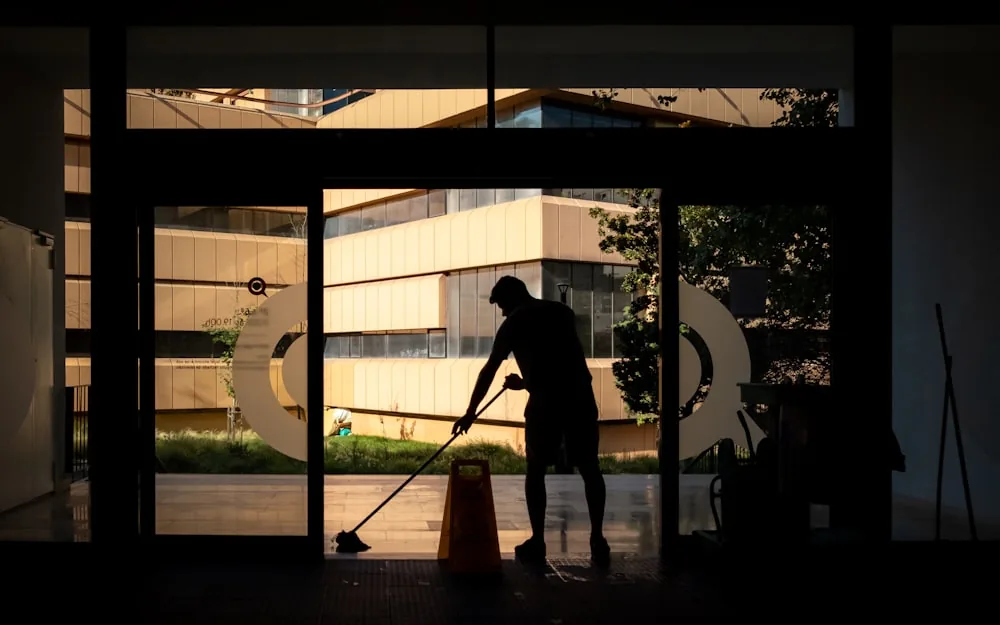
After Builders Cleaning for Trowell homes
Extensions on the estate houses and occasional farm building conversions. The difference from a city site is the ground: no hard standing at the back, so wet soil comes in on boots alongside plaster dust and the two combine into something a vacuum cannot lift.
Building work here is extensions on the postwar estate houses and the occasional conversion of a farm building. What makes it different from a city site is what is underfoot. There is rarely any hard standing at the back of these properties, so the working route in and out is soil for the whole job, and everything the trades carry through the house arrives wet as well as dusty. Plaster dust on its own vacuums up. Plaster dust that has been walked into damp soil bonds to a floor and has to be taken off with water and a deck brush. So the staging is real here: a rough clean while the mess is still being made, a detail clean once the trades are off site, and a final pass after the ground outside has been made good.
Trowell sits in NG9, under Broxtowe Borough Council. Farmland on one side, the motorway, canal and railway on the other. Most of what lands on a house here is agricultural rather than urban: soil off a ploughed field, chaff at harvest, insects in numbers a city street never sees. It arrives in days rather than weeks, so a fixed rota misses it.
What we run into on Trowell after builders cleaning jobs
The dust that matters last is the dust nobody made. A new extension goes on and the spoil from the footings sits in a heap on what used to be lawn, and the ground around the new wall stays open and soft for months. Every dry day after that lifts silt off it, and it goes straight through the new doors, which are the ones being opened. So we check what the outside looks like before agreeing a date for the final clean. Bringing it forward to suit a handover means cleaning a house that will look untouched within a fortnight, and that is a genuinely wasted visit rather than a slightly early one.
How a Trowell after builders cleaning job actually runs
The logistics on a village job are tighter than on a site with hard standing and room to turn. There is usually one drive, and the skip, the trades' vans, your own cars and ours are all competing for it, so the clean has to be slotted into a day when the drive is ours rather than squeezed alongside a first fix. If the skip is standing on the road rather than the frontage, that is a permit matter for whoever ordered it, and it is worth checking before it lands. We also need to know what is still live: which power is on, whether there is a tap that runs, and whether the temporary lighting is still up, because a windowless room with no fitting in the ceiling cannot be cleaned properly by torchlight. Waste is the last thing to settle. We take away what we generate, and we can bag and stack offcuts and packaging, but builders' waste belongs in the skip while it is still there, and once it has gone the leftovers become a tip run rather than a cleaning task.
Who books it here
The local reference points are St Helen's Church, the M1 services and the old Nottingham Canal nature reserve, which is usually enough for us to find a property without a postcode lookup.
We run Trowell on the same round as Stapleford, Kimberley and Nuthall.
What we check on every Trowell job
The protective film on new windows is a job in itself and it gets worse the longer it is left. Frames and trays arrive with a plastic film taped over them, and once it has sat through a summer of sun on a south facing elevation the plastic goes brittle and the adhesive bakes onto the surface underneath. It then comes away in small shreds rather than one pull, and there is a gummy residue behind it that has to be softened and taken off with a plastic blade, never a metal one, because a scratch in a new frame is permanent. Worse, plaster splash and silicone smears sit under the edge of that film, so the frame you thought was protected needs the same detail work as the ones that were not. Tape residue along the head of a frame does the same and is the easiest thing on the whole job to walk past.
What the after builders cleaning covers
A sample of what is included
- Stage two, the detail clean: Sanitaryware descaled and polished
- Stage two, the detail clean: Inside all new units, cupboards and wardrobes
- Stage one, the rough clean: Paint, plaster, grout and adhesive from glass, tiles and hardware
- Stage three, the final buff: Filters changed in extractors and ventilation that have been pulling dust for weeks
That is a sample rather than the whole list. The full after builders cleaning page sets out every section of the scope, what is deliberately excluded and why, how long it takes on each property size, and what tends to go wrong.
What after builders cleaning costs in Trowell
Priced by surface area and dust load rather than bedroom count, across all stages. Our own cost research puts the Midlands at around the UK average to 10% below it, so Nottingham sits in the lower half of every range on this page.
£180 to £350
Typical per project in Trowell. A written fixed price for your property takes about a minute: ask for one.
| Property | Typical per project |
|---|---|
| Single room refurbishment | £180 to £350 |
| Kitchen or bathroom fit-out | £250 to £450 |
| Loft conversion | £350 to £600 |
| Extension, 2 to 3 rooms | £500 to £900 |
| Whole house renovation | Quoted after a site visit |
Three things explain most of the gap between two builders clean quotes: whether all stages are included, whether window exteriors are covered, and who removes the waste.
Priced separately
| Extra | Typical cost |
|---|---|
| Exterior windows | £30 to £90 |
| Carpet cleaning, per room | £35 to £60 |
These are typical Nottingham market ranges, not our price list. We quote a fixed price in writing for your property before anything starts, because a number produced from a bedroom count alone has priced an average property rather than yours. The figures above come from our own UK cost research, set out in full in this guide.
The building work is finished but the garden is a mess. When should the final clean happen?
After the ground is made good, if you can wait. Until there is turf, paving or at least a settled surface outside the new doors, silt keeps arriving and the finish clean does not hold. What we can do in the meantime is the detail clean: glass, frames, reveals, sills, inside cupboards, the dust that is sitting on horizontal surfaces and in the tracks. The final pass on floors and glass is the short part, and it is the part worth holding back.
The barn conversion has exposed brick and old beams. How do those get cleaned?
Dry, in nearly every case. Brick laid in lime mortar and reclaimed timber both absorb water, and washing them drives building dust into the surface instead of taking it off, then leaves a white efflorescence coming back through as it dries. We use soft brushes and a vacuum with the nozzle held off the face, and we take several passes rather than one hard one. Wire brushes and pressure washers take the face off soft brick permanently, so neither comes into the building.
The film on our new windows has gone brittle and will not peel. Can it still be removed?
Usually, but it is slow and it should be priced as its own item rather than assumed into a general clean. Baked film comes off in fragments, and what is left behind is adhesive rather than plastic, so it needs a softening agent, dwell time and a plastic blade worked at a shallow angle. If the film has been on a coloured or foiled frame through a hot summer, we will test a corner first and tell you honestly what the finish underneath looks like.
Does the power and water need to be on for the final clean?
Yes, and it is worth confirming rather than assuming, because a builder often kills a circuit at the end of the job. We need sockets for vacuums, a tap that runs, and permanent or temporary lighting in any room without a window. A bathroom with no fitting in the ceiling and no daylight cannot be checked properly, let alone cleaned, and the fine dust that is left in the corners is exactly what shows on the first bright morning after you move back in.
Do you cover the whole of Trowell?
Yes, all of NG9 and the surrounding streets, under Broxtowe Borough Council. We are based in New Basford, NG7, and there is no travel charge to any part of our area.
How much does after builders cleaning cost in Trowell?
The same as anywhere else on our patch, because we do not price by postcode. What moves the number for this service is the surface area and dust load, how many stages you need, and who is removing the waste. Tell us that and you get a fixed price in writing rather than a range.
How soon can you start after builders cleaning in Trowell?
As soon as the last trade is off site, and we book all the stages up front rather than one at a time. Off street space at nearly every house, so parking is rarely the problem, and we group Trowell with Stapleford, Kimberley and Nuthall on the rota.
Rated 5.0 out of 5on Google
5.0 from 7 reviews on our Google Business Profile. Every one of them is from a real customer and none of them were incentivised. Read them, and add your own, on the profile itself.
Thanks for the professionalism in your Services. Nice job.
Highly recommend.
Tell Us What You Need,We Will Price It
- A fixed price in writing, before anything starts
- No deposit and no contract to sign
- DBS-checked cleaners, directly employed