Pet hair is a mechanical problem and pet odour is a chemical one, and they need completely different approaches. Hair has to be lifted out of fibres, which vacuuming alone rarely achieves once it has worked in. Odour comes from proteins and uric acid in urine, saliva and skin oils, and masking it with fragrance does nothing, because the source is still there.
Homes with a shedding cat or dog genuinely need deep cleaning three times a year rather than twice. That is not an upsell, it is what the hair and dander load does to carpets and upholstery.
Getting hair out of carpet
Ordinary vacuuming picks up loose hair from the surface. Hair that has worked down into the pile and wrapped around the fibres stays put, which is why a carpet can look hairy immediately after vacuuming.
The sequence that actually works:
1. Rubber squeegee or a rubber-bristled brush, dragged across the carpet in short strokes. This is by far the most effective tool and it beats any vacuum attachment. The static and the rubber drag the hair up and it balls into rows you can pick off. A window squeegee from a supermarket works perfectly well.
2. A slightly damp rubber glove does the same on smaller areas, on stairs and on upholstery.
3. Vacuum afterwards, slowly, in two directions at right angles. Speed matters more than suction here, and most people vacuum roughly three times too fast for the machine to work.
4. A carpet rake for long pile, which lifts both the hair and the pile itself.
Whatever you use, clean the machine. Hair wraps around a brush bar until it stops rotating, at which point the vacuum is doing almost nothing while sounding exactly the same. Cut it free with scissors regularly, and wash the filter.
Upholstery
Same principle, more care about fabric.
Vacuum with an upholstery tool, getting right down the sides and under the seat cushions where hair collects most. Then the rubber brush or a lint roller for what remains. For woven fabrics, a slightly damp microfibre wiped in one direction gathers a surprising amount.
Check the care label before any wet cleaning. The codes matter:
- W means water-based cleaners are safe
- S means solvent only, no water at all
- WS means either
- X means vacuum only, nothing wet
Getting this wrong causes shrinkage, permanent watermarks or colour bleed. The most common expensive mistake is treating an S-coded fabric with water, which watermarks instantly and often more visibly than the original problem.
Odour, properly
Fragrance sprays do not remove odour. They add a second smell on top of the first, and within a day you are back where you started with two problems.
Urine
You need an enzymatic cleaner. This matters and it is not marketing. Ordinary detergents remove the smell temporarily but leave uric acid crystals in the fibre, and those crystals reactivate whenever humidity rises, which is why the smell keeps coming back on damp days weeks after you cleaned.
The method:
- Blot as much as possible first, pressing hard with paper towel. Stand on it to draw liquid up
- Apply enzymatic cleaner generously enough to reach as deep as the urine went, which is almost always deeper and wider than the visible mark
- Leave it to work for the time on the label, often several hours. Do not blot it dry immediately, because the enzymes need to stay wet to function
- Cover with a damp cloth to slow evaporation if the room is warm
- Dry thoroughly afterwards with a fan
Never steam clean a urine stain before treating it. Heat sets the proteins and makes the odour permanent.
Find hidden spots with a UV torch in a dark room. Dried urine fluoresces, and it is frequently in places nobody suspected: skirting boards, the sides of furniture, curtain hems.
General animal smell
The source is usually textiles rather than air: the bed, the blankets, the sofa, the carpet. Wash everything washable at 60°C, deep clean what is not, and ventilate hard.
Bicarbonate of soda left on carpet for a few hours before vacuuming absorbs a fair amount and costs almost nothing.
The honest limit
If urine has soaked through the carpet into the underlay, cleaning the carpet will not fix the smell. The underlay has to be replaced, and sometimes the subfloor sealed. A good cleaner will tell you this rather than taking your money twice, and it is a fair test of who you are dealing with.
Hard floors
Easier, with two cautions.
Turn the vacuum's brush bar off so it does not fling hair around the room. And be careful with water volume on wood or laminate, since pets plus standing water is how boards lift at the seams. A barely damp microfibre mop is right; a sloshing bucket is not.
Paw prints and nose marks on glass need nothing more than glass cleaner, but they need it often.
When someone has allergies
The trigger is usually dander, which is skin flakes, and proteins in saliva, rather than the hair itself. Hair matters mainly because it carries them around the house.
Allergy UK estimates that allergies affect around 20 million people in the UK, roughly a third of the population. Where a household member reacts to a pet, the cleaning changes in emphasis:
- HEPA filtration on the vacuum, otherwise you are aerosolising the allergen you just collected
- Wash pet bedding weekly at 60°C
- Keep pets out of bedrooms, the single most effective measure and the least popular
- Hard flooring beats carpet in the rooms the pet uses most
- Wipe the pet down with a damp cloth or grooming wipe, which removes loose dander before it lands on your furnishings
- Groom outdoors where possible
- Deep clean carpets and upholstery three or four times a year
- Consider an air purifier with HEPA filtration in the main living room and bedroom
Environmental control helps and works alongside medical treatment rather than instead of it. Speak to a GP or pharmacist about symptoms.
Professional cleaning, and when it is worth it
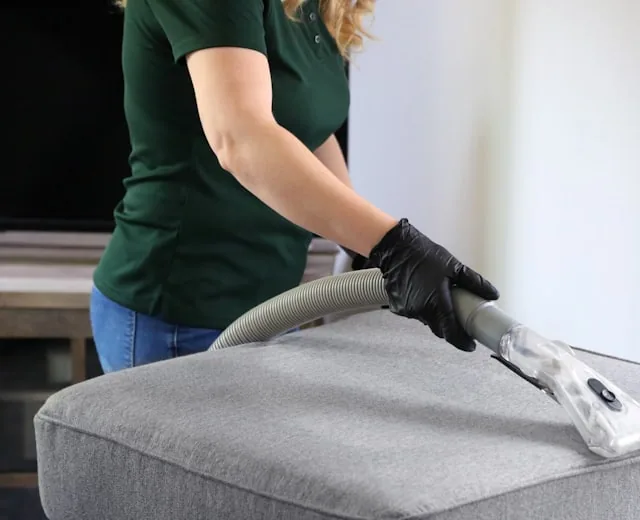
Hot water extraction removes embedded hair, dander and odour from carpet in a way domestic equipment does not, because of the water temperature and the vacuum recovery pressure. For a home with pets, it is a genuinely different result rather than a marginally better one.
Expect roughly £35 to £60 a room, with a supplement of £15 to £40 per affected area for urine treatment, which requires enzymatic pre-treatment and more time.
Tell the company about urine specifically when you book. It needs a different process from general soiling, and a company that turns up expecting a standard clean cannot do it properly.
Practical habits that reduce the load
- Groom regularly, ideally outside. Ten minutes of brushing removes hair that would otherwise end up in your carpet
- Wipe paws at the door in winter, which cuts the mud dramatically for a few seconds of effort
- Wash pet bedding weekly, not when it smells
- Use a washable throw on the sofa spot they favour, and wash it weekly
- Vacuum every two or three days in the rooms they use, rather than weekly
- Deal with accidents immediately, because the difference between a sixty second response and a next-day one is usually the difference between no odour and a permanent one
If you are renting
Check your tenancy agreement. Many UK agreements that permit pets also require professional carpet cleaning at the end of the tenancy, and a requirement attached specifically to pet permission is generally more likely to be enforceable than a blanket cleaning clause.
Budget for it from the start rather than discovering it in your final month. Professional carpet cleaning for a two bedroom flat runs £75 to £175.
Frequently asked questions
What is the best tool for pet hair? A rubber squeegee or rubber-bristled brush, used before vacuuming. Cheap and far more effective than any vacuum attachment.
Do air purifiers help with pet allergies? They help with airborne particles as a supplement to cleaning and ventilation, not as a replacement for them.
Why does the urine smell keep coming back? Because uric acid crystals remain and reactivate with humidity. Only an enzymatic cleaner breaks them down.
Can I use vinegar on pet urine? It neutralises some odour temporarily but does not break down the crystals, so the smell returns. Use an enzymatic product.
How often should I deep clean with pets? Three times a year, with carpets professionally cleaned every six months.