Find the care label before you clean anything. It is usually under a seat cushion, under the base, or on a tag beneath the frame, and it carries a single letter that determines what you can safely use.
Getting this wrong causes shrinkage, watermarks and colour bleed that cannot be undone, and it is the most expensive avoidable mistake in domestic cleaning.
The cleaning codes
| Code | Meaning | What you can use |
|---|---|---|
| W | Water-based cleaners only | Water-based upholstery shampoo, foam, damp cloth |
| S | Solvent only | Dry cleaning solvent. No water at all |
| WS or SW | Either | Water-based or solvent |
| X | Vacuum only | No liquid of any kind. Vacuum and brush only |
If there is no label, treat it as S or X until proven otherwise, and test in a hidden place such as the underside of a cushion or the back of the sofa where it faces the wall.
The code that causes most damage is S treated as W. Solvent-only fabrics, which include many rayon, viscose and some silk blends, watermark permanently the moment water touches them, and the ring is often more visible than the original stain.
By fabric
Cotton and linen. Usually W or WS. Prone to shrinkage and watermarking if over-wetted. Use minimal moisture and dry fast.
Polyester and microfibre. Usually W or WS, and among the most forgiving. Microfibre sometimes stiffens or changes appearance when wet, which normally resolves once dry and brushed with a soft brush in one direction.
Velvet. Depends on the base fibre. Cotton velvet is water-sensitive and marks easily; polyester velvet is far more robust. The bigger issue is pile crushing, so always brush the pile in one direction after cleaning and never scrub in circles.
Wool. Alkaline-sensitive, so high-pH cleaners cause colour loss and texture change. Needs pH-neutral products and low moisture. Best left to a professional.
Viscose and rayon. The most difficult upholstery fabrics. They watermark extremely easily, lose strength when wet, and can shrink. Frequently coded S. Do not attempt water on these.
Silk. Professional only, effectively always.
Chenille. Usually W or WS but the pile crushes and flattens, so minimal moisture and gentle brushing.
Leather. A different discipline entirely. Dust regularly, wipe with a barely damp cloth, and use a leather-specific cleaner and conditioner two or three times a year. Never use general household cleaner, alcohol wipes, baby wipes or anything abrasive. Aniline leather is unprotected and absorbs everything, so treat it with particular care and test anything first.
Faux leather and PU. Wipe with a damp cloth and mild soap. It degrades with age and cracks; nothing prevents that indefinitely.
Cleaning a W or WS sofa yourself
- Vacuum thoroughly first, with the upholstery tool. Get down the sides and under the cushions, where most of the debris is
- Remove hair with a rubber brush or a slightly damp rubber glove, which lifts embedded hair far better than any vacuum attachment
- Test your cleaner on a hidden area and let it dry fully before deciding
- Work with foam, not liquid. Whisk up upholstery shampoo and apply only the foam with a soft brush or cloth. The less water in the fabric, the better
- Work panel by panel, completing a whole cushion or panel rather than stopping mid-way, because a partial clean dries with a visible edge that is very hard to remove
- Blot, do not rub
- Dry fast. Open windows, use a fan. Slow drying causes watermarks and occasionally mildew
- Brush the pile back in one direction while slightly damp
The single biggest mistake is over-wetting. Upholstery has foam and padding underneath that holds water for days, and damp foam smells and eventually degrades.
Stains on upholstery
Blot first, always. Outside inwards, white cloth.
Grease: bicarbonate of soda or cornflour to absorb for fifteen minutes, then vacuum. Water only afterwards, and only on W or WS fabrics.
Wine, tea and coffee: blot, then a weak solution of washing-up liquid and white vinegar applied to the cloth rather than the fabric.
Pet accidents: enzymatic cleaner, and be aware it needs to reach as deep as the urine went, which on a sofa usually means into the foam. This is frequently the point at which professional treatment becomes necessary.
Ink and biro: isopropyl alcohol on cotton wool, dabbing, changing the cotton wool constantly. Test first, as alcohol affects some dyes.
Chocolate: let it harden, scrape gently, then treat the residue.
Professional upholstery cleaning
Worth it for wool, silk, viscose, velvet, leather, anything valuable, anything coded S or X, and any sofa with significant pet contamination.
| Item | Typical cost |
|---|---|
| 2 or 3 seat sofa | £45 to £90 |
| Corner or 4+ seat | £80 to £150 |
| Armchair | £15 to £30 |
| Dining chair | £8 to £18 |
| Headboard | £20 to £40 |
| Leather treatment, sofa | £60 to £120 |
Drying is two to six hours with good extraction.
A competent technician will identify the fibre, check the code, pre-test for colourfastness in a hidden area, and tell you before starting which marks are unlikely to come out. If someone quotes over the phone without asking what the sofa is made of, be cautious.
Maintenance
Vacuum weekly, including under the cushions. This alone extends fabric life substantially, because grit abrades fibres exactly as it does in carpet.
Rotate and flip cushions so wear and compression distribute evenly.
Keep it out of direct sunlight. UV fades upholstery faster than almost anything, and the fading is permanent and uneven, so one side of a sofa ends up visibly different.
Deal with spills immediately. The difference between a sixty second response and a twenty minute one is usually the difference between no mark and a permanent one.
Wash removable covers only if the label allows, and put them back on slightly damp. Fully dried covers frequently shrink just enough to become impossible to refit, which is a miserable afternoon.
Consider a fabric protector on new upholstery. It does not prevent stains but it buys you time to blot, which is where the real benefit lies.
Keep pets off, or use a washable throw on their favourite spot and wash it weekly.
Frequently asked questions
Where is the care label? Under a seat cushion, under the base, or on a tag beneath the frame. If the cushions are fixed, check the underside of the sofa.
What if there is no label? Treat it as solvent-only or vacuum-only, and test carefully in a hidden area.
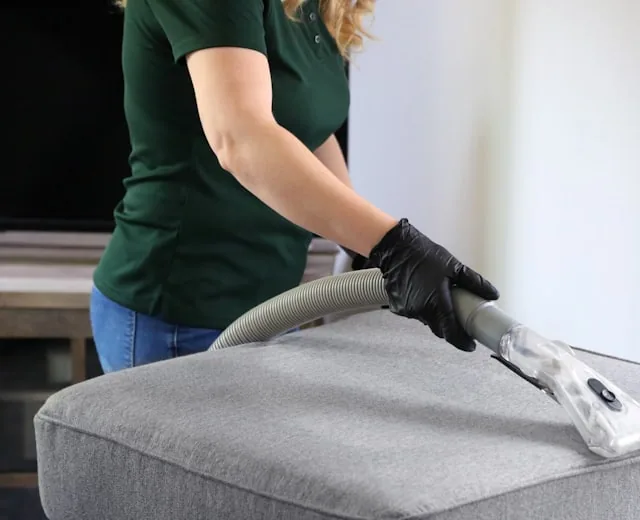
Can I use a carpet cleaner on a sofa? Only with the correct upholstery hand tool and only on W or WS fabrics, and even then use far less moisture than you would on carpet.
How often should upholstery be professionally cleaned? Every 12 to 18 months for an average household, every six to twelve months with pets or children.
Will cleaning remove pet smell from a sofa? Surface odour usually yes. Odour from urine that has soaked into the foam, often not, since the source is inside the cushion.
Can I steam clean a sofa? Only if the fabric is coded W or WS and the manufacturer permits it. Steam on an S-coded fabric causes permanent watermarking.