Interior glass is almost always the tenant's responsibility at check-out. Exterior glass almost never is. Most window arguments at a tenancy boundary come from one side failing to make that distinction and arguing about the wrong thing.
Glass is awkward because three problems look identical in a photograph. Dirt, a failed sealed unit and condensation damage all read as "the windows are not clean" from six feet away. Only one is a cleaning matter. Method, water-fed poles and frequency are covered in the window cleaning guide. This one is about the boundary.
Who is responsible for which pane
Unless the tenancy agreement says otherwise, the split follows access.
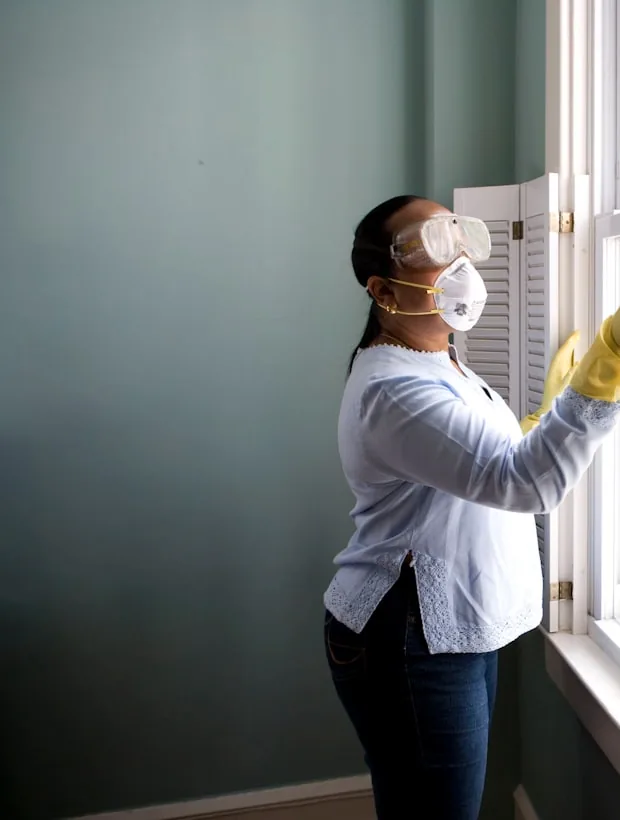
The tenant normally has interior glass, sills, frames and the tracks the windows sit in, plus any exterior face reachable safely from inside a window that opens inward.
The landlord normally has exterior glass above ground level, communal glazing, conservatory and roof glazing, and anything needing access equipment, plus keeping the units themselves in repair.
Two things reinforce that. Most agreements do not require a tenant to work at height, and no sensible reading of a cleaning clause obliges someone to put a ladder against a wall for a deposit. And in England, a clause requiring the tenant to pay for professional cleaning has not been enforceable since the Tenant Fees Act 2019. A landlord can require the condition the property was let in, less fair wear and tear, but cannot demand a receipt.
What a check-in report actually records about glass
Most check-in reports handle windows badly, and the failure is symmetrical: landlords lose claims they should win, tenants pay deductions they should not. A line reading "windows: clean" supports nothing. It does not separate interior from exterior, record the frames, or say whether the glass was already misted the day the keys changed hands.
A report that holds up records, per window:
- Interior glass condition, with chips or scratches photographed close up
- Whether the sealed unit is clear or already misting between the panes
- Frame condition, including yellowed UPVC, flaking timber and the state of the seals
- Track and sill condition, photographed with the window open
- Any mould or black spotting on the reveals, the plaster returns around the opening
- Whether the exterior was cleaned before check-in, and by whom
That last item is the one landlords skip and later wish they had. If the exterior was cleaned at check-in and a photograph says so, a claim about it is arguable. If the report is silent, it is not. The check-in inventory principle bites harder here than anywhere else, because damage and dirt photograph the same.
Why interior glass is in scope and exterior usually is not
The deposit scheme adjudication standard is the same for glass as for everything else. The tenant returns the property in the condition recorded at check-in, less fair wear and tear, and the landlord evidences the shortfall from both ends.
Interior glass fails that test easily when dirty. Cooking residue and condensation film on a kitchen window is not wear. It is the ordinary consequence of occupation, removable in ten minutes, and it was not there at check-in.
Exterior glass rarely fails it, for reasons of causation rather than fairness. Soiling builds from weather, traffic film, pollen and droppings whether the property is occupied or empty. A tenant who lived quietly for two years did not cause it, and an adjudicator asked to charge one for the atmosphere is being asked to make the property better than it was let.
Frames and tracks sit with the interior, and a track full of grit is the commonest window-related deduction there is. Fifteen minutes with a crevice tool and a toothbrush prevents it.
A misted unit is a repair, not a dirty window
When moisture appears between the two panes of a double glazed unit, the perimeter seal has failed. Vapour is moving in and out of the cavity and the milky bloom sits on interior surfaces nothing can reach. No cleaner can clean it. The unit has to be replaced.
It gets miscategorised in both directions. Tenants are charged for it as poor cleaning; landlords defer it as cosmetic and inherit a worse problem, because a failed unit has lost most of its insulating performance. Seal failure is a component reaching the end of its life or a manufacturing fault, not something occupation causes.
How to say so in a dispute, if you are the tenant, in writing and without heat:
The deduction listed as window cleaning relates to misting between the panes of the sealed unit in the [room] window. This is a failed double glazing seal. The moisture is inside the cavity and is not reachable from either face of the glass, so it cannot be a cleaning matter. Replacing a failed unit is a repair and falls to the landlord. I have cleaned both accessible faces and the frame, photographed on [date].
That is usually enough, because it is correct and checkable. At adjudication the deciding question is whether the landlord can evidence that the unit was clear at check-in and that tenant action caused the failure. Age alone will not get them there. Landlords should take the same line early: separating the repair from the clean protects the rest of the claim, while mixing them invites scrutiny of everything else in it.
Condensation and mould on the reveals
Black spotting on the plaster returns around a window, on the sealant line and along the bottom of the glass is a ventilation problem showing itself at the coldest surface in the room. The window is the symptom, not the cause.
Surface mould that wipes off with a dilute mould cleaner and does not return is a cleaning item, and a tenant who leaves it behind could reasonably have handled it. Mould that returns, spreads across the wall, or appears in a property with no extractor fan and no trickle vents is a different matter, and responsibility shifts towards the landlord.
The test at check-out is to wipe it and see whether it comes back. Clean and dry after a fortnight means condensation and housekeeping. Black again means no clean will hold and the property needs vents, extraction or heating attention before the next tenancy. At the check-in end, photograph the reveals. Not the room. The reveals.
The drainage slots nobody knows about
Along the bottom of the outer face of most UPVC frames are small slots, often behind a hinged cover. They drain the channel inside the frame where rainwater collects, and they block with dust, moss, cobwebs and paint.
When they block, water sits in the frame, finds the internal lip and appears as a puddle on the sill, which tenants report as a leaking window. The frame is not leaking. It is full. Clearing it takes seconds with a thin brush, and it belongs on the void checklist rather than a callout in November.
Where windows go in the void schedule
The full turnaround order is in the landlord turnaround guide. Glass has its own placement inside it, and getting it wrong means paying twice.
Exterior first, early in the void. It is weather dependent, needs nobody inside, and can happen while the plumber works. Booked for the day before check-in, a wet week costs you the appointment.
Interior glass after every trade and after decorating, before carpets. Painters mark glass, plasterers splash it, drilling dusts it.
Frames, tracks and drainage slots in the same visit, by the same person. Splitting them is how tracks end up undone.
Photograph the glass with the window open, so frame, track and seal sit in one dated image.
Exterior glass on a two bedroom flat runs £15 to £45 against a full turnaround of roughly £300 to £500. It is the cheapest line on the schedule and the most often forgotten, which is a poor trade when the first thing a viewer does is look through it. Our end of tenancy cleaning covers interior glass, frames, sills and tracks as standard, and window cleaning covers the exterior separately.
Frequently asked questions
Do tenants have to clean the outside of the windows? Usually no. Most agreements do not require work at height, and exterior soiling comes from weather rather than occupation. Ground floor glass with safe access is the exception, and only where the agreement says so.
Can a landlord charge me for misted double glazing? Not as a cleaning cost. Moisture between the panes is a failed sealed unit and a repair, which falls to the landlord unless they can evidence tenant-caused damage.
Are window tracks part of an end of tenancy clean? Yes, and they are one of the most commonly deducted items. Vacuum with a crevice tool, then a damp cloth and a toothbrush for the corners. Do the hinges too.
Should a landlord clean windows in every void? Interior yes, every time, because it forms the check-in baseline. Exterior at every changeover, booked early while trades are still working.