Two things change in a household with children or pets: what you clean with, and how often you clean the floors. Almost everything else stays the same. The instinct to clean everything more often and to disinfect constantly is understandable and largely unnecessary.
Products: what to be careful with
Small children and pets share two risk factors. They are close to the floor, and they put things in their mouths.
Worth avoiding or handling carefully
Concentrated bleach, particularly on floors that a crawling child or a dog will be on shortly afterwards. Rinse thoroughly if you use it.
Strong acidic descalers, which are corrosive. Keep them locked away rather than under the sink behind a child lock that a determined three year old will defeat within a fortnight.
Anything with a scent strong enough to fill a room. Fragrance is not inherently harmful, but volatile organic compounds accumulate in unventilated homes, and children breathe faster relative to their body size.
Essential oil cleaners around cats. This is the one that surprises people. Cats lack a liver enzyme needed to process several essential oils, and tea tree, eucalyptus, citrus, pine and peppermint oils are all associated with toxicity in cats. Check the ingredients before using a "natural" cleaner in a house with a cat, because natural is not the same as safe.
Antifreeze and screenwash in garages, which is not cleaning but is among the most common serious poisonings in dogs and cats. It tastes sweet and a very small quantity is dangerous.
Carpet powders and deodorisers, which pets walk through and then lick off their paws.
Generally fine
- Detergent and hot water, which handles the vast majority of household cleaning
- Bicarbonate of soda
- White vinegar and citric acid, though not on natural stone
- pH-neutral floor cleaners
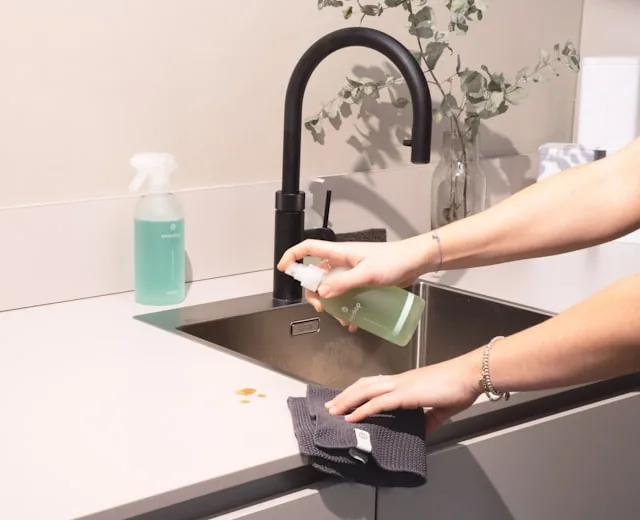
- Most standard multi-surface sprays, used as directed and with ventilation
Storage matters more than product choice
The realistic risk in most homes is not residue on a worktop. It is a child drinking something.
- Store everything above head height or in a locked cupboard
- Keep products in original containers with their labels intact
- Never decant cleaner into a drinks bottle. This causes a meaningful number of accidental poisonings every year
- Keep dishwasher tablets locked away, since they are brightly coloured, sweet-smelling and highly caustic
- Know the number for NHS 111 and keep the product label if something is swallowed
What genuinely needs doing more often
Floors. The main change. Children and pets live at floor level, so floors go from weekly to every two or three days in the rooms that get used. Everything else stays roughly where it was.
High touch surfaces during illness. Handles, switches, taps and the fridge door.
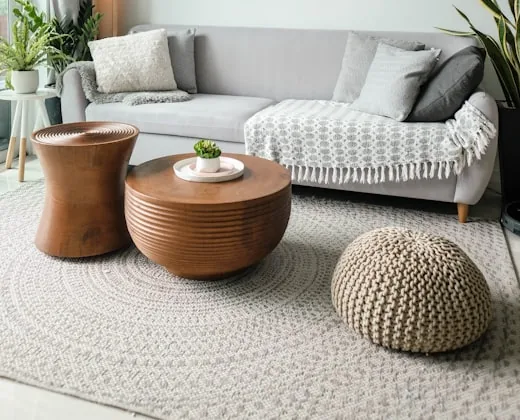
Soft furnishings. Sofas, rugs and cushions absorb far more in a household with children and pets. Vacuum upholstery weekly rather than monthly.
Bedding. Weekly at 60°C, particularly if anyone has allergies. Allergy UK notes that a large share of house dust mite exposure occurs in bed, and mites are among the most common indoor triggers for asthma and rhinitis.
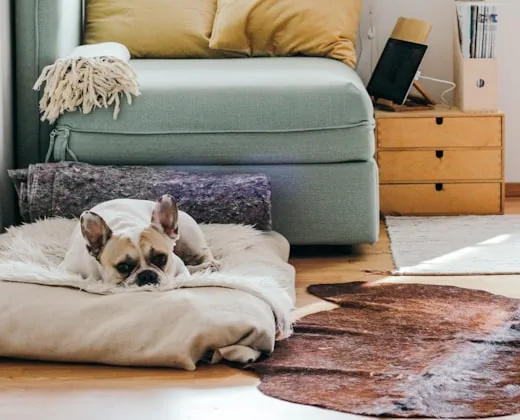
Pet bedding. Weekly at 60°C.
The car, which nobody mentions and which becomes genuinely unpleasant.
High chairs and booster seats, including the straps and the crevices, which are worse than the tray.
What does not need doing more often
- Walls and ceilings
- Inside cupboards
- Windows
- High level dust
- Anything above about four feet, since neither children nor pets are up there
Concentrating effort at low level and leaving the rest on its normal schedule is far more effective than a general increase everywhere.
Routines that survive a busy household
The five minute pack-down. Before bed, everything on the floor goes into a box or basket. Not sorted, just cleared. Sorting can happen at the weekend, and a clear floor is worth more than an organised toy box.
One basket per room. Toys migrate. A basket in each room where they end up means clearing takes seconds rather than a trek.
Do bathrooms while children are in the bath. You are in the room anyway and cannot leave.
Wipe the hob while dinner cools. Warm grease lifts with a cloth. Cold grease needs a chemical.
Involve children early, at a low standard. A four year old cannot clean well, and that is not the point. Children who have never been asked to tidy at four are much harder to involve at eleven. Accept the mediocre result and resist redoing it in front of them.
Robot vacuum on a schedule, if floors are your main issue and the floor is usually clear enough to run one. They do not replace a proper vacuum but they handle the daily crumb layer, which is most of the problem.
A doormat regime. Shoes off at the door removes a startling proportion of the dirt that would otherwise end up everywhere.
Pets specifically
Hair is mechanical, not hygienic. A rubber squeegee or rubber-bristled brush dragged across carpet lifts embedded hair that vacuums cannot reach, and it is by far the most effective tool. Do that first, then vacuum slowly in two directions.
Wash pet bedding weekly at 60°C.
Keep pets out of bedrooms if anyone has allergies. This is the single most effective measure and the least popular.
Wipe paws at the door in winter, which cuts the mud load dramatically for about ten seconds of effort.
Deal with accidents using an enzymatic cleaner rather than a general spray. Enzymes break down the uric acid crystals that ordinary detergents leave behind, and those crystals are what smells again whenever humidity rises.
Groom regularly, outdoors where possible. Ten minutes of brushing removes hair that would otherwise end up in your carpet.
Lowering the standard, deliberately
The most useful adjustment is not a technique. It is deciding which rooms have to be right and which do not.
Most households with young children function best with two or three rooms held to a good standard, usually the kitchen, the main bathroom and wherever adults sit in the evening, and the rest allowed to be adequate.
Trying to hold an entire house to a pre-children standard is how people end up cleaning constantly and feeling like they are failing at it. The house will be tidier again, and it is a shorter phase than it feels.
Frequently asked questions
Do I need antibacterial products with a baby in the house? Not routinely. Detergent and hot water handle normal household cleaning. Disinfect properly when someone is ill, and around raw meat preparation.
Are essential oil cleaners safer? Not necessarily, and several are actively dangerous around cats. Natural is a sourcing claim, not a safety claim.
How do I clean up after a pet accident on carpet? Blot hard, apply an enzymatic cleaner generously enough to reach as deep as the urine went, leave it wet for the time on the label, then dry with a fan. Do not steam it first, which sets the odour permanently.
Is a robot vacuum worth it? For daily crumb and hair management on clear floors, yes. It does not replace a proper vacuum for carpet.
How do I clean toys? Hard plastic toys go in a mesh bag in the dishwasher on a low temperature cycle, or wash in hot soapy water. Fabric toys go in the washing machine.
What about slime, glitter and modelling clay? Slime lifts with white vinegar. Glitter is best attacked with a lint roller before vacuuming. Modelling clay should be left to dry completely and then broken up and vacuumed, never wiped wet.